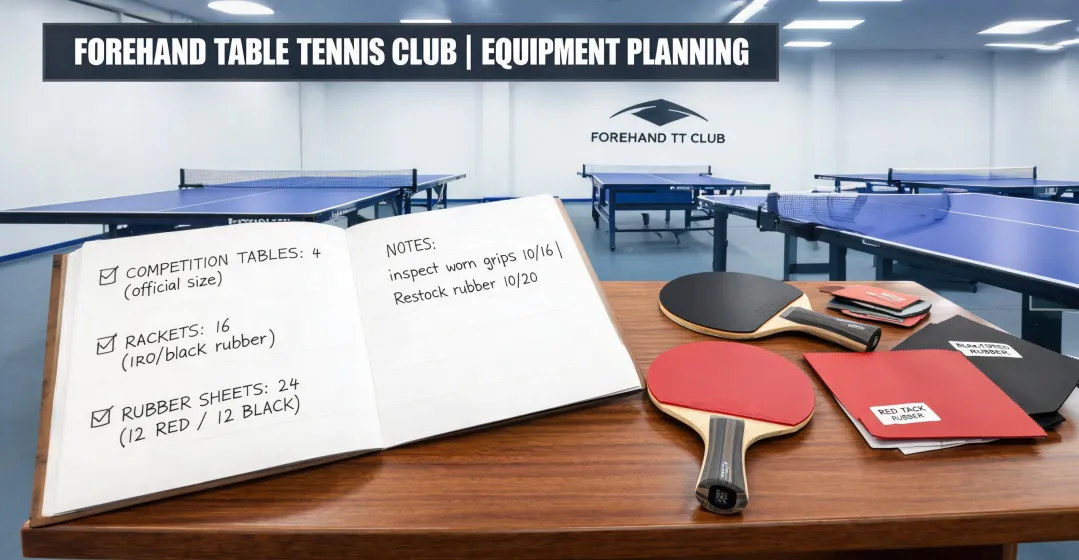
I've spent the better part of six years managing equipment budgets for a mid-sized indoor sports facility. My role covers procurement across every department—table tennis, strength training, cardio, accessories. Altogether, I've processed around $180,000 in equipment orders. Give or take a few thousand; I'd have to check the exact totals.
Here's my honest position: Butterfly table tennis equipment is worth the premium in the right context—but most buyers are paying for the wrong products, for the wrong reasons. That sounds contradictory. It's not. It's the difference between buying a brand and buying the equipment that actually delivers value for your players.
The cost-per-hour reality check
Most buyers focus on the sticker price and completely miss the cost per hour of actual use. That's the figure that matters when you're equipping a club, school, or any program where the gear will see regular play.
In 2023, I compared orders from four vendors for a full club setup. A no-name racket set was roughly half the price of Butterfly's entry option. It lasted about eight weeks before the rubber started peeling. Meanwhile, the Butterfly 401 table tennis racket—the baseline spec I've settled on for entry-level equipment—has been going for nearly two years in most cases.
(Should mention: the 401 isn't what I'd call a serious competitive weapon. It's a solid, predictable racket for beginners and recreational players. That's all we need from that tier. For reference, it typically prices around $50–70 at major retailers based on our quotes in late 2024; verify current pricing.)
The number crunching wasn't subtle: replacing the no-name rackets twice in twelve months cost us about 30% more than buying the Butterfly equipment once. And that math didn't include the complaints from members who watched their racket fall apart mid-match.
Rozena: the rubber where the real budget lives
Rackets are one purchase. Rubber is a recurring one, and that's where the real cost decisions happen.
I track every rubber order in our procurement system—around 200 orders over six years, maybe 180, I'd have to count to be sure. Tenergy is exceptional. Dignics is exceptional. Both are exceptional at draining our quarterly supply budget. If I put either of those on every club racket, I'd have nothing left for bats, tables, and training equipment.
Butterfly Rozena is the rubber I keep coming back to.
Reviews of Butterfly Rozena table tennis rubber tend to undersell it—it doesn't have the explosive feel of Tenergy 05, and it's a bit heavier. But in our tracked spending, switching club rackets from Tenergy 05 to Rozena cut our rubber costs by about 35% a year, with no measurable drop in member satisfaction or team results.
Per FTC advertising guidelines (ftc.gov), performance claims need to be substantiated. I've learned to treat marketing numbers in this industry as aspiration rather than data. What convinced me was repeat purchase behavior: players who tried Rozena didn't ask for the more expensive option afterward. That's not a lab study—it's one facility's invoice history, 2022–2024—but it's real spending behavior.
When Butterfly should not be on your purchase order
This is where I get pushback from other budget managers. I've recommended against Butterfly in specific situations.
A six-week youth summer camp where children will use the rackets as hockey sticks when they get bored? Buy the disposable stuff. A small community center with a table that sees casual play twice a week? You don't need Viscaria. The Butterfly 401 is fine because it survives longer and plays within the expectations of that setting. Even a generic $30 racket would probably survive there.
There is no "best" racket or rubber—only the best fit for your situation. Anyone who insists otherwise is selling something. I've seen facilities buy premium table tennis gear while their strength area ran on mismatched plates and broken clips, because the coach had brand approval power but nobody did a usage-cost analysis.
This matching principle applies across our whole facility. We invested in a solid dumbbell set, but we skipped the competition-grade finish because our members aren't competitive lifters. We've had trainers request the premium attachment package for cable machine back workouts—we priced it, tested it, and went standard. The members who wanted specialized movements used resistance bands and free weights instead.
People also ask: "Can I buy gym equipment with HSA?" It comes up more than you'd think, particularly with community partners planning funded purchases. I'm not a tax professional, so take this with a grain of salt. An HSA can generally cover equipment used to treat a specific medical condition when properly documented, but it usually won't cover a standard dumbbell set or a table tennis table as a general wellness purchase. The deeper point is procurement discipline—letting a funding source dictate your equipment list is backward. Buy what matches actual use, then figure out how to fund it.
What has actually been saving us money
Here's the counterintuitive part: the biggest savings I've found in six years of tracking orders didn't come from choosing one product over another.
Most of our budget overruns came from two things: rush shipping and vendor roulette when stock was inconsistent. The solution was boring—plan orders ahead, consolidate shipments, and work with suppliers who reliably stock the Butterfly products we need. When we've done that, our total cost of acquisition has dropped noticeably.
In FY2024, we spent $8,400 less on table tennis equipment than in FY2022, serving roughly the same number of players. About half of that was the Rozena switch; the other half was just planning discipline.
The verdict
Even after committing to Rozena as our primary rubber, I kept second-guessing. What if club results dipped and we couldn't prove it wasn't the rubber? The two weeks until our first tournament after the switch were stressful. I didn't relax until the results came in—not better, but not worse. That was enough.
Butterfly equipment is worth it when the level of play and the intensity of use justify it. It's not worth it when you're buying a brand name to fill a bin.
Tenergy and Dignics for our competition squads. Rozena for club-level rackets. The 401 for entry level. That's the allocation framework that has served us well—it balances performance for the players who need it and fiscal discipline for the budget I'm accountable for.
Most buyers focus on the brand name and miss the total cost picture. The real fix isn't avoiding premium brands; it's doing the math that tells you which premium purchases earn their place. At the end of the day, that's the difference between a budget that survives the year and a budget that blows through the quarter.