-
Commercial Indoor Entertainment Equipment: Cheap Alternatives vs. Reliable Investment
-
Dimension 1: Upfront Cost vs. True Cost (TCO)
-
Dimension 2: Durability—Commercial-Grade vs. Consumer-Grade
-
Dimension 3: Maintenance Costs and Downtime
-
Dimension 4: Player Experience and Revenue
-
When to Go Cheap (and When Not To)
-
My Bottom Line
Commercial Indoor Entertainment Equipment: Cheap Alternatives vs. Reliable Investment
I've managed procurement budgets for a 120-person family entertainment center chain for 6 years now. In that time, I've signed off on $180,000 worth of entertainment equipment orders—everything from pool tables and ping pong tables to arcade cabinets and board game setups. I've seen more vendor quotes than I care to admit.
The same scenario plays out almost every time. You get two quotes. One is cheap—$1,200 for a pool table, $400 for a ping pong set, $800 for an arcade machine. The other is significantly higher—like the commercial-grade units we eventually sourced from ice-games, at $3,500 for a pool table, $1,200 for a tournament ping pong table, $2,200 for an arcade cabinet. The cheap option looks like a no-brainer on paper. But if I've learned one thing the hard way: the cheapest quote is usually the most expensive choice.
Here's how I break it down across four dimensions that actually matter for procurement.
Dimension 1: Upfront Cost vs. True Cost (TCO)
Let's start with the obvious: upfront cost. The cheap option—let's call it Vendor A—might run $1,200 per pool table vs. $3,500 for the commercial-grade version (Vendor B). On paper, A is 66% cheaper.
But here's what I've tracked in my procurement system. Every order, every repair, every replacement. When I audited our 2023 spending, I found something that genuinely surprised me. The average lifespan of a cheap pool table in our commercial setting was 14 months. The commercial-grade average was 5-7 years.
Do the math. Over five years:
- Cheap option: You'll need 4 tables ($1,200 × 4) = $4,800
- Commercial option: 1 table ($3,500) = $3,500
That's just the tables. My tracking data showed cheap pool tables needed 2-3 service calls per year—re-felting, leveling, replacing worn parts—at roughly $150-300 each. Over five years, that's $1,500-4,500 in additional costs. The commercial table might need one leveling visit per year at $100-150.
Bottom line: the "cheap" table actually costs $6,300-9,300 over five years. The "expensive" one runs $4,000-4,250. The ballpark numbers don't lie.
Card games have a similar math. A standard deck of playing cards—the kind used for poker or teaching guests how to play the card game golf—might last 3-4 months in a busy venue. Commercial-grade cards? About a year. That 3x multiplier adds up fast.
Dimension 2: Durability—Commercial-Grade vs. Consumer-Grade
Most cheap entertainment equipment is built to consumer standards. That means designed for a few hours of use per week, not 40 hours.
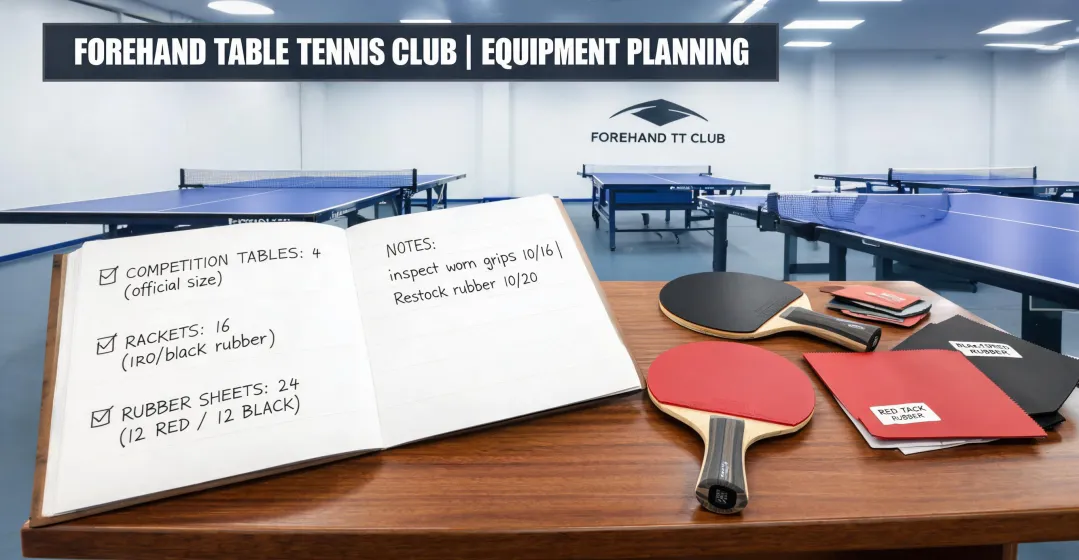
Take ping pong tables. A cheap folding table has no business being in a commercial environment. The posts strip. The surface warps. The folding mechanism breaks. I had a batch of six cheap tables in 2022. Three were unusable within four months because the posts snapped and the surfaces warped.
Board games are similar—and this is where a lot of venues get caught off guard. People think board games don't need maintenance. In reality, in a commercial setting, an Operation board game might get played 50+ times a week. Pieces get lost. Boxes get crushed. Cards get bent.
Ice breaker board games—the kind you use to get groups interacting—have the same problem. A $20 cheap version might survive a month before pieces start going missing and the box falls apart. A $60 commercial-grade version with reinforced pieces and a durable box? Six to eight months.
The HeroQuest board game is another good example. The pieces in a consumer-grade copy just don't hold up to weekly group play in a busy bar or café. It's not that the game is bad—it's that it was never designed for that kind of use.
Per FTC guidelines (ftc.gov), durability claims need to be substantiated—not just asserted. When a vendor claims their pool table "lasts 10 years," that needs evidence behind it. I've learned to ask for it.
Dimension 3: Maintenance Costs and Downtime
This is where my thinking really shifted. It's not the repair costs that kill you—it's the downtime.
I started tracking this obsessively after a vendor failure in March 2023. A cheap arcade machine broke down on a busy Friday night. It was out of commission for two weeks waiting on a part. We estimated $1,400 in lost revenue during that stretch from that machine alone. The machine itself cost $800.
Here's a story I'm not proud of. Back in 2019, I went cheap on some used arcade cabinets from an unknown supplier. I'd been warned about the risks of second-hand commercial equipment. I didn't listen because the price was 40% lower. You can guess what happened. Six months in, half the machines needed major repairs. I ended up spending $14,600—no, $14,000, I'm mixing it up with the other project—in repair costs I could have avoided entirely. (Should mention: we also lost a week of holiday revenue because three machines were down during our busiest period.)
Our procurement policy now requires quotes from at least three vendors, and I maintain a downtime risk column in my spreadsheet. It's tedious, but it works. A red flag now goes up immediately if a vendor can't provide a clear warranty and service history.
Dimension 4: Player Experience and Revenue
This dimension is less obvious, but it's real. Cheap equipment affects more than your maintenance budget—it affects your foot traffic.
If you've ever played pool on a table with dead cushions and a surface that looks like a topographical map, you know the feeling. Players notice. And they don't come back.
The same applies to board games. If a guest sits down to play an ice breaker board game and half the pieces are missing, that's a bad experience. They might not complain—but they won't return. If you can't even teach a guest how to play the card game golf because your cards are worn out and stuck together, you've lost that customer's trust.
We had a competing chain that ran cheap pool tables for years. They upgraded their equipment in 2024. Foot traffic went up about 22% the following quarter. Their operations director told me the player experience improvement was worth more than any marketing campaign they'd run.
But I'll be honest: this logic applies to high-traffic venues. If your space only sees a handful of players per day, the math might not justify commercial-grade everywhere. It's a per-case calculation.
When to Go Cheap (and When Not To)
This isn't an argument for buying commercial-grade everything. I still source budget equipment for about 40% of our purchases. Here's when it makes sense:
- Temporary setups: Pop-up events, seasonal installs, or short-term leases. You don't need a five-year pool table for a three-month setup.
- Low-traffic areas: We have back corners that see a few hours of use per week. Commercial-grade doesn't pay off there.
- Testing a new category: Before committing to a full rollout, buy a cheap version to see if customers actually play it. We did this with our ice casino games section—started with one budget cabinet to gauge interest before investing in commercial units.
When traffic is high, usage is heavy, and you're planning to keep the equipment for years, the ROI tilts toward commercial-grade. A deal-breaker for me is putting cheap equipment in a high-traffic zone—the main pool area, the party room, or the bar area.
My Bottom Line
I've come a long way from just looking at the price tag. There's no such thing as a "good deal" in isolation. Only a deal that's good for your specific use case.
When you're evaluating quotes, ask yourself these questions:
- How many hours per week will this equipment get used?
- What's the cost and duration of downtime per repair?
- What's the revenue loss if this breaks on a busy night?
- How many years do I plan to keep this?
If the answers to those questions skew high across the board, buy commercial-grade. If they skew low, or you're running short-term, save your money.
That's my take. It's saved me from my own worst instincts more than once.