There's no single "best" Butterfly table tennis setup
I handle facility purchasing for a 400-person company. My job is to make sure the tables, rackets, and room layouts work—not just look good on paper. In 2024 we outfitted three different playing spaces, and I've processed enough orders to know that most table tennis buying guides miss the real question.
If you search "butterfly-table-tennis," you'll get a lot of "best of" lists. I'm going to give you something more useful: a way to choose based on your actual situation. There is no universal answer because a competitive club and a shared office lounge have completely different needs.
Let me start by saying I'm not a coach. I'm the person who signs the purchase orders and has to explain why the equipment didn't last. What I've learned comes from buying for facilities, not from tournament play.
The three scenarios I see in B2B table tennis buying
Most purchases fall into one of three buckets:
- A competitive club or school team
- A school or community recreation room
- A corporate multi-purpose rec room with other equipment
If you're looking for a butterfly table tennis racket review, the first thing you need to decide is which bucket you're in. Your choice of rubber and racket will follow from that.
Scenario A: Competitive club or school team
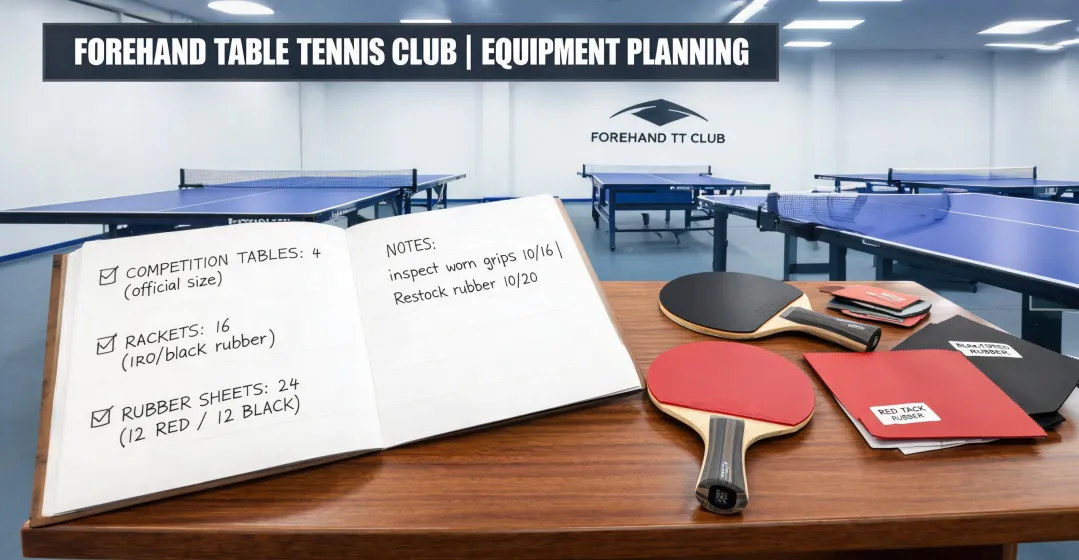
If players train several times a week and compete in league matches, buy performance gear and plan for maintenance. This is where the butterfly table tennis racket review conversation gets serious.
The club teams I've worked with standardized on Butterfly blades and separate rubbers. Blades like Viscaria or the Timo Boll ALC are popular choices for advanced players. On the rubber side, Tenergy 05 has been a reference point for high-tension rubbers, and Dignics 09C is a newer option with more grip and dwell.
If you're buying for junior players, I'd start with Rozena. It's more forgiving than Tenergy or Dignics, and it costs less. I'd rather spend ten minutes explaining rubber differences than have a player buy something they can't control. An informed player asks better questions and practices more confidently.
One note about butterfly rubber table tennis: the rubber decision is not a "set it and forget it" decision. Competitive rubbers need to be replaced periodically, and the two sides have to be red and black to meet ITTF equipment rules. At least, that's been my experience with school programs—rubbers wear out faster when players aren't storing their rackets properly.
Scenario B: School or community recreation room
School buyers often ask for a butterfly table tennis racket review because they need something durable without a steep maintenance curve. My answer: a premade racket like the Timo Boll 2000 is usually enough. Premade rackets are consistent, easy to replace, and don't require gluing.
The table matters more than the racket. A Butterfly Rollaway or Centerfold 25 is stable and folds up for storage. A regulation table is 2.74 meters by 1.525 meters, per ITTF standards, so think about how much room players need to step back and swing.
For butterfly rubber table tennis choices at this level, I'd skip the high-performance lines. They're made for players who can maintain them and appreciate the response. In a busy rec room, a ball accidentally hit at a racket or a table edge will do more damage to an expensive setup. A mid-range setup will play better for the average player than a high-end setup that's mismatched with their skill level.
Scenario C: Corporate multi-purpose rec room
This is the scenario that surprised me the most. I expected the corporate fit-out to be mostly about budget. It turned out to be about floor plan and expectations.
If the room also has a folding exercise bike in the corner and a dumbbell chest press station, your table tennis table needs to fit around a lot of moving parts. We installed a Centerfold 25 because it folds in half and can be stored against a wall when a group wants to use the weights.
And if you're asking how to set up pool table in the same room? Start with cue clearance. Leave at least 5 feet around each rail, because a standard cue is about 58 inches long. A folding exercise bike can be tucked into a corner, but a dumbbell chest press needs a safety zone behind it. We learned that the hard way when a dropped dumbbell landed close to a table leg.
For rackets in this scenario, buy a few premade Butterfly rackets and don't buy custom rackets for a shared lounge. What I mean is: they'll walk. Oh, and if someone brings a personal Tenergy setup into the office lounge, it will get used as a cake stand. That's not a criticism. It's just reality.
I'm glad we spent time on the room layout before ordering. The surprise wasn't the racket choice—it was how much floor clearance we misjudged at our first location. Measure twice, then order the table.
How to tell which scenario you're in
I've learned not to recommend one package for every buyer. Instead, ask three questions:
- Who is the main player? If they're competing, go with Scenario A. If they're staff, clients, or students, start with Scenario B or C.
- How long will the equipment live in that room? A shared room wears out gear fast. Budget for replacement parts.
- What else is in the room? If the answer includes "folding exercise bike, dumbbell chest press, and pool table," your main problem is layout, not rubber technology.
When you build your budget, include a spare racket or replacement rubbers. That's not as exciting as a new blade, but it's part of total cost of ownership. According to Butterfly's 2025 product information, the current rubber range spans from Rozena to Dignics; verify current specifications before you finalize a purchase order.
The short version
Butterfly table tennis equipment doesn't have a universal best setup. A club needs Viscaria and Dignics; a school needs premade rackets and a rollaway table; a corporate rec room needs a folding table, a few durable rackets, and enough clearance to avoid hitting the pool table.
My experience is based on facility orders, not national tournaments. If you're buying for a high-performance academy, talk to a coach who works with elite players. But for most B2B buyers, the right move is to match the equipment to the room and the players, not to the brand's flagship products. A consistent brand—we use Butterfly—makes reordering and warranty support easier, but the brand only works if the setup fits your situation.
This guidance reflects my experience with facility purchases in 2024 and early 2025. Product lines and prices change, so verify current options before you place the PO.