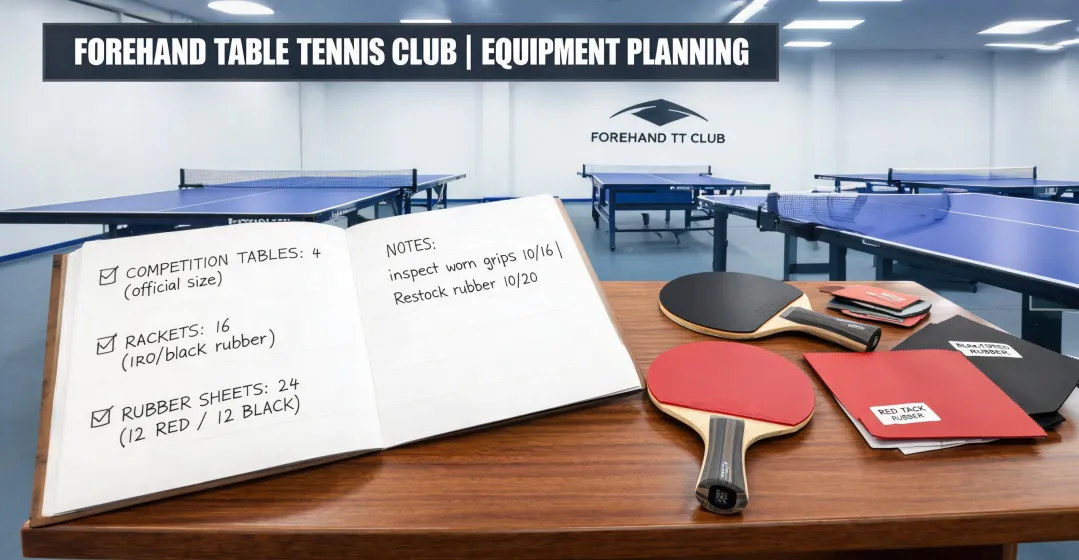
If you're a facility manager, school athletic director, or buyer for a fitness chain looking to add or upgrade table tennis gear, you've probably realized: there is no universal 'best' setup. A $300 table might be a disaster for a high-traffic college rec center, but perfect for a quiet corporate break room. This guide breaks down the decision into three common scenarios, so you can find the right balance of durability, performance, and budget for your specific needs.
The Three Most Common B2B Scenarios
After a few years of sourcing for different types of clients, I've noticed the questions always fall into one of three buckets. Let's figure out which one you're in.
Scenario A: The 'Install and Forget' Heavy-Use Facility
You run a fitness club, a large university rec center, or a community sports hall. Your tables will be used daily, sometimes for hours. They'll get moved, bumped, and occasionally abused. You need equipment that can take a beating and still play well four years from now.
- Table recommendation: Look at the Butterfly Rollaway models. Specifically, the 25mm or thicker tournament-spec tops. They're heavier and more expensive upfront (think $1,200–$2,000+), but they'll survive the constant rolling and storage. In my experience, a cheap table here will warp or have a leg break within 18 months. I saw a club that bought a 'budget' commercial table (from another brand) and had to replace the entire surface after two years. The cost of the replacement plus the labor of swapping it? About the same as buying the better table in the first place. (Note to self: always factor in the cost of downtime.)
- Rubber recommendation: For high-traffic rental paddles, go with Butterfly Rozena. It's a tacky, medium-hard rubber that's very forgiving for casual players. It has a ton of grip but doesn't punish bad technique like a Dignics 05 would. A set of 20 pre-assembled paddles with Rozena will cost more than the cheap stuff ($35–$45 per paddle vs $15), but they'll last three times longer and members will actually enjoy the game more.
- Robot recommendation: If you're running lessons or leagues, a Butterfly Amicus Prime is the gold standard. It's a serious investment ($2,000+), but it can program complex drills for different skill levels. It's basically an assistant coach. For a basic club, the Butterfly Smart Robot ($500–$700) is a solid, lower-cost entry point.
Scenario B: The 'Good Enough but Budget-Conscious' School or Church
Your budget is tight, but you still want something that plays well and is safe. The table might see 10-15 hours of use a week by kids or casual players. You can't spend $1,500 on a single table, but you also can't afford to replace it every year.
- Table recommendation: Look at the Butterfly 401 or Timo Boll 2000 series. These are 19mm–22mm, which is a step down from tournament-grade but still plays true. They're about $600–$900. It's not built for a daily 12-hour marathon in a pro shop, but for a school gym or a game room, it's a fantastic value. A key check: make sure the metal frame and leg locks are good quality. That's where the cheaper tables usually fail first.
- Rubber recommendation: For school programs, stick with Butterfly Rozena. It's durable and consistent. A cheaper option? The Butterfly Sriver is a classic, but it's a bit slower and less grippy. For practice paddles, pre-assembled rackets with Rozena are the sweet spot. The upside of Rozena is it's super forgiving. The risk? A talented, attacking kid might find it too controlled and want something faster. I'd suggest ordering a few higher-grade Dignics 09c paddles for your advanced players or coaches.
- Robot recommendation: For a school, a Butterfly Smart Robot is perfect. It's under $1,000 and can set basic drills. Calculating the worst case: you buy it, the kids break it in a week? Best case: you teach them how to respect the equipment, and it lasts years. The expected value says go for it, but a lot of us hesitate. If I could redo that decision in my school days, I'd invest a few extra dollars in a carrying case or a cover to protect it when not in use.
Scenario C: The 'Brand Experience' Retailer or Premium Venue
You run a high-end sports retail store, a premium hotel, or a corporate fitness center. The equipment needs to look amazing, play exceptionally well, and reflect a premium brand image. Your customers are enthusiasts or first-time players who want the 'pro' experience.
- Table recommendation: There's really only one choice: the Butterfly Viscaria or Apolonia series for a premium tournament table. But even more important than the table? The Dignics 05 and Dignics 09c rubbers. These are the actual high-end, pro-level products that enthusiasts want to try. The rubber alone can cost $90–$100 per sheet. A retailer should display the Amicus Prime robot as a demo piece. It's a serious piece of kit that tells customers, 'We are serious about table tennis.'
- Rubber recommendation: Dignics 05 is the top-tier tensor rubber. It's fast, spinny, and what many pros use. Dignics 09c is a newer, tackier spin monster. For a demo paddle, assembling one with Dignics 05 and one with 09c is a great way to let customers feel the difference between them. A lot of resellers try to be 'one-stop shops' and carry everything. But in my experience, the vendor who says 'this is our best in class for spin, and this is our best for control' earns more trust than the one who says 'all these are great.'
- Crucial detail for retailers: Make sure your inventory includes the Dignics 05 (red) and Dignics 09c (black) in the most popular sponge thicknesses (1.9mm, 2.1mm). That's what the serious players will come in asking for. Don't just stock the whole range; stock the right ones. (Source: Butterfly USA, own retail analysis, 2024).
How to Decide: A Simple Self-Diagnostic
Consider these three questions:
- What's the daily play time? If it's over 4 hours daily, you're in Scenario A. Under 2 hours, you're in B or C.
- What happens if a table leg buckles? If the answer is 'we fix it ourselves and it's a minor inconvenience,' go with Scenario B. If the answer is 'the club manager will lose their job,' go with Scenario A.
- Who is your player? If they are a casual admin or a serious enthusiast, Scenario C.
There is no wrong path, just the right path for your situation. Starting with the right table and rubber from Butterfly will save you money, time, and headaches down the line. Good luck.